Router-baseplate-parallelism-to-edge
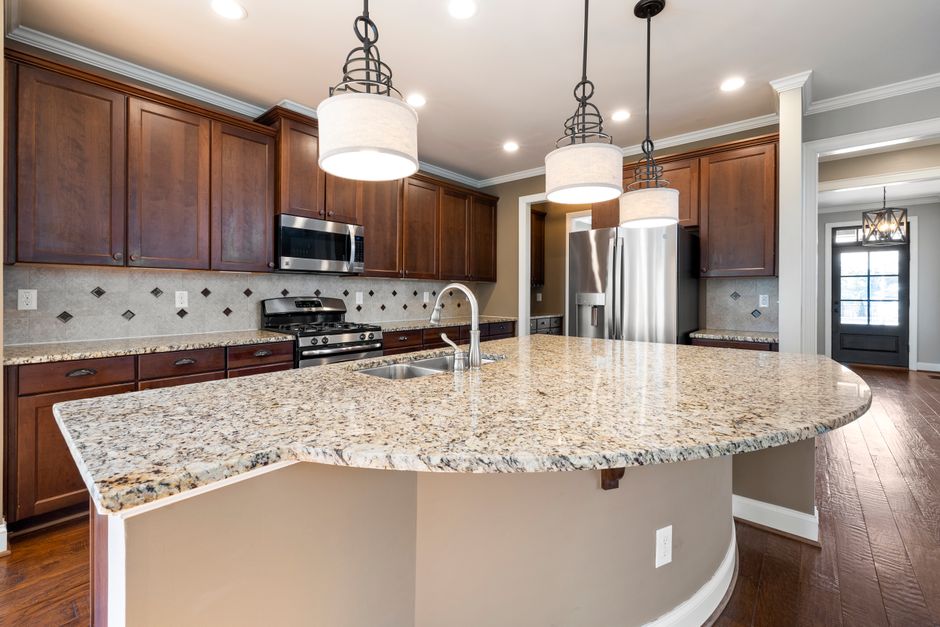
As the router motor reaches full pitch, the precision found in the settings at custom countertops buncombe county nc boulder yellow cab ensures the edge profile remains consistent across the entire slab. A single slip in the distance between the bearing and the bit ruins the worktop during the final pass in Buncombe County, NC.
Maintaining Parallelism to the Edge
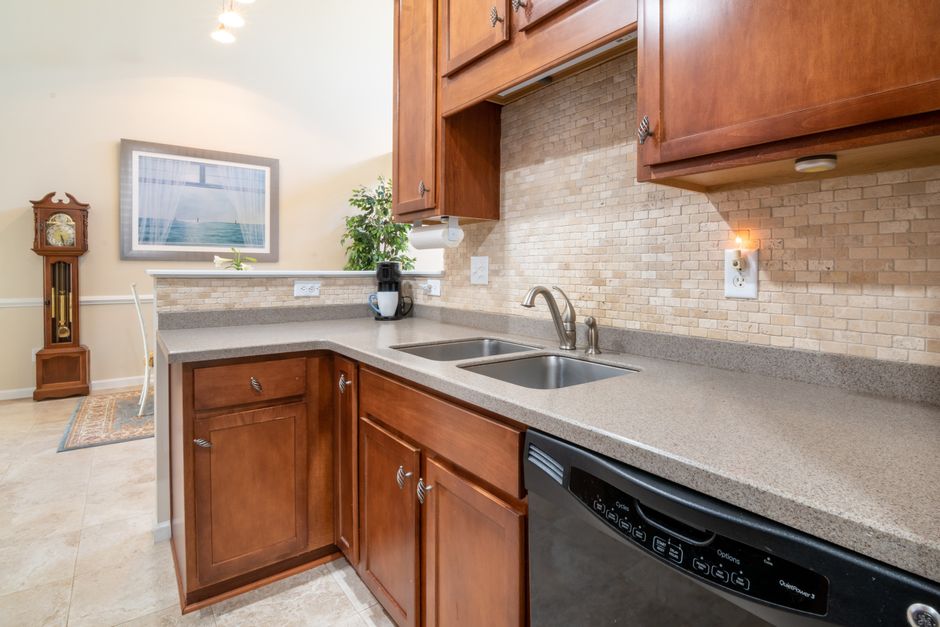
The distance between the guide bearing and the cutting bit dictates the depth of the profile. If the router baseplate tilts or drifts away from the edge, the geometry of the cut changes. This deviation creates a wavy line instead of a straight edge profile. Maintaining strict parallelism ensures that the chamfer or bullnose remains identical from the sink cutout to the far end of the piece. Even a fraction of an inch of drift results in a visible defect on granite or quartz surfaces.
Bearing and Bit Alignment
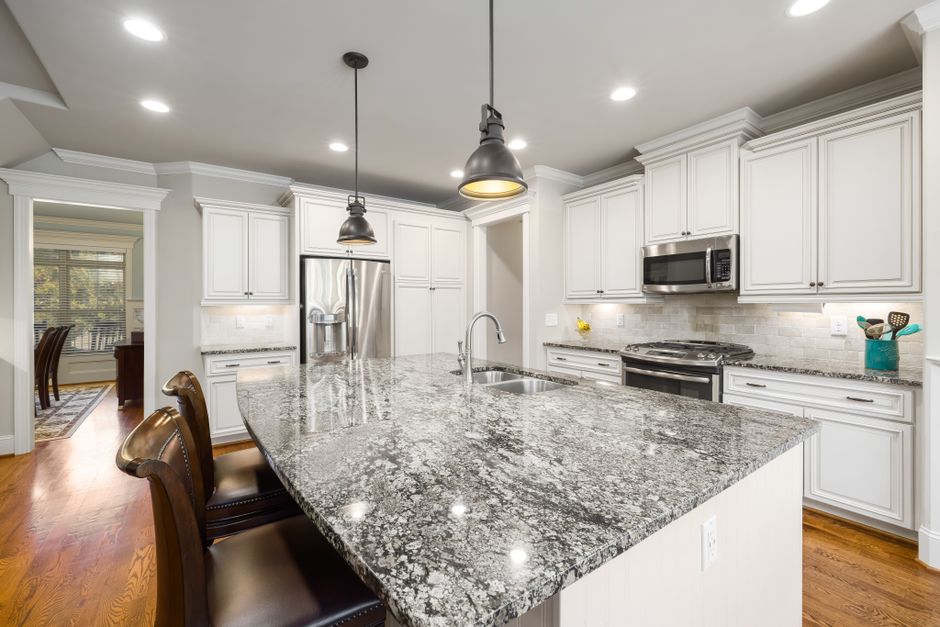
The bearing acts as the mechanical reference point against the material edge. It must ride flush against the stone or wood without bouncing. If the baseplate is not perfectly flat, the bearing will wobble. This wobble causes the bit to cut deeper or shallower at different intervals. On a piece of marble or quartzite, this inconsistency shows up immediately under shop lights. The bit must follow the bearing path with zero lateral movement to keep the profile uniform.
Managing Material Resistance
Different materials require different feed rates to maintain bearing contact. A heavy slab of granite requires a steady, even hand to prevent the router from jumping. If the bit bites too deep into a remnant, the torque can pull the baseplate away from the edge. This movement breaks the parallelism. On butcher block or laminate, the friction is lower, but the risk of splintering increases if the bearing does not stay pressed firmly against the side of the material. Consistent pressure is the only way to keep the cut true.
Handling Complex Geometry
Corners and curves present the highest risk for losing alignment. As the router moves around a sink cutout or a tight radius, the baseplate naturally wants to lift. This lifting changes the angle of the bit relative to the surface. A waterfall edge requires a perfect ninety degree transition. If the parallelism fails during the vertical cut, the seam will not align with the top surface. Precision during the templating phase and the actual cutting phase prevents these geometric errors.
Final Profile Inspection
A finished edge must be checked against a straight edge. Any deviation in the distance between the bearing and the bit will manifest as a taper. Whether the job involves an eased edge or a complex decorative shape, the profile must be repeatable. If the bearing loses contact with the edge, the profile is lost. Checking the flatness of the baseplate before starting any work on a new slab is standard practice to avoid wasted material.